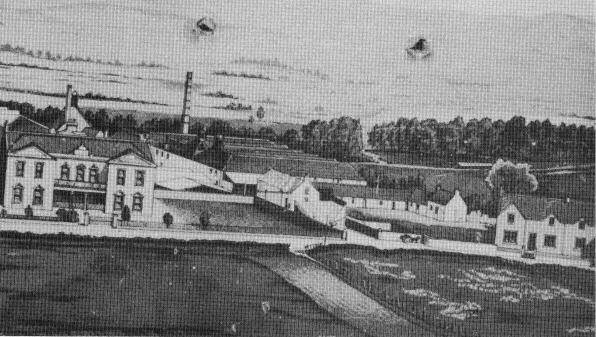
"Long John" Macdonald - Grandfather of John Macdonald, 22nd October 1825 This day I left my home at Torgulbin in the valley of the Spean River and came the short journey to Lochy Bridge, a few miles to the North of the town of Fort William. I had been charged by those men of substance and authority within the district of Lochaber to assist in the extirpation of a plague of illicit stills and unlawful brewers of spirits, and to undertake the establishment here of a legitimised still house.
Having pledged myself and my skills to this task, with all my endeavour I do undertake to search out a place compatible with the production of Uisge Beatha, The Water of Life, and have come to the lee of that Ben Nevis, under whose shadow lies every other mountain and hill in Scotland or indeed in the whole length and breadth of this land.
Here do I hope to find a constant and regular source of pure, clear water, without which there can be no possibility of Uisge Beatha. I am aware of the responsibility that this charge places upon my shoulders and of the great debt I owe to the still men who were my predecessors.
I have few doubts, however, that in exercising their choice in my favour, the authorities have taken no small account of my stature. It is not for nothing that I am known as "Long John", my size being of no small deterent to those who would challenge the legitimisation and regulation of whisky manufacture.
26th November 1825
If any man can be said to have a proud and heroic lineage, then surely that man is myself. I was born into an ancient Highland family, a branch of the Macdonalds, or Macdonnels of Keppoch, in the year 1798. We are a noble race of men who can trace our ancestry back to John Macdonald the 14th century Lord of the Isles, whose wife, the Princess Margaret, was the great great grand-daughter of King Robert the Bruce, who defeated the English at Bannockburn in 1314.
The fortunes of my family ebbed and flowed over many centuries, reaching their lowest point after the 1745 Jacobite Rebellion when two thousand of our men marched with Bonnie Price Charlie. The Jacobite defeat at the Battle of Culloden in 1746, the last battle fought on British soil, was hard on my family. At the Council of War before the battle, the chief of the Keppoch Macdonalds, Alexander, strongly advised Price Charlie against the choice of Culloden for the forthcoming fight against the army of the English Government. He was over-ruled but nevertheless fought bravely during the battle, dying with his brother Donald and many other fighting men as they led a charge.
Fifty-three years after this tragedy I ws born, one of seven sons, into a farming family at Torgulbin, by the side of the River Gulbin, in my beloved Lochaber.
28th of October 1865 - [Donald P. Macdonald]
It is with deep sadness that I must record the death at Fort William these two days past, of my father John MacDonald, known to the people of Lochaber and his many friends throughout the Highlands as Long John. My father, who died in his fifty-ninth year is to be buried in the little Roman Catholic Churchyard of Cille Choirill above Roybridge on his beloved Braes of Lochaber.
4th of August 1887
The business of distillery whisky here in Lochaber is doing well. Fifty years ago the Ben Nevis Distillery was producing 200 gallons per week in full production and now our output is more than ten times that amount. There are ten warehouses which together currently hold 8161 casks containing 523,722 gallons of whisky.
Such is the industriousness of our two Lochaber distilleries in the production of usquhabae that I have had our workman, under my own supervision, construct a handsome new concrete pier. This is to serve my fleet of steams which ply Loch Linnhe, delivering the whisky to our customers far and near.
29th of February 1888
I am proud to be amongst a number of prominent Scottish Roman Catholics chosen to be presented to His Holiness the Pope. As befitting such an auspicious occasion I elected to attire myself in full Highland dress for the papal reception, a mode of garb that greatly interested His Holiness who, examining in detail the kilt, sporran, hose and bonnet, was said by observers to be greatly impressed.
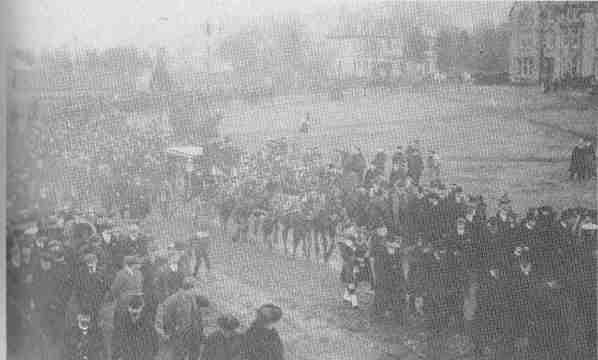
1st of November 1891
The death occurred today, at the age of 56, of Mr Donald P. Macdonald. Mr Macdonald, who died from a cerebal haemorrhage and who left the considerable estate of Pounds:110,311-9-8d, was greatly respected throughout Lochaber and the Highlands of Scotland. [Scan picture of funeral]
28th of November 1891
Following the death of D.P. Macdonald the stewardship of the distilleries was undertaken by his two sons, John and Archibald William Macdonald, later Colonial A.W. Macdonald of the Lovat Scouts.
1941
After more than 100 years and three generations of the Macdonald family the Dew of Ben Nevis Distillery has been sold to Mr. Joseph Hobbs.
Records by Ann MacDoneel & Robert MacFarlane, Spean Bridge, 1986
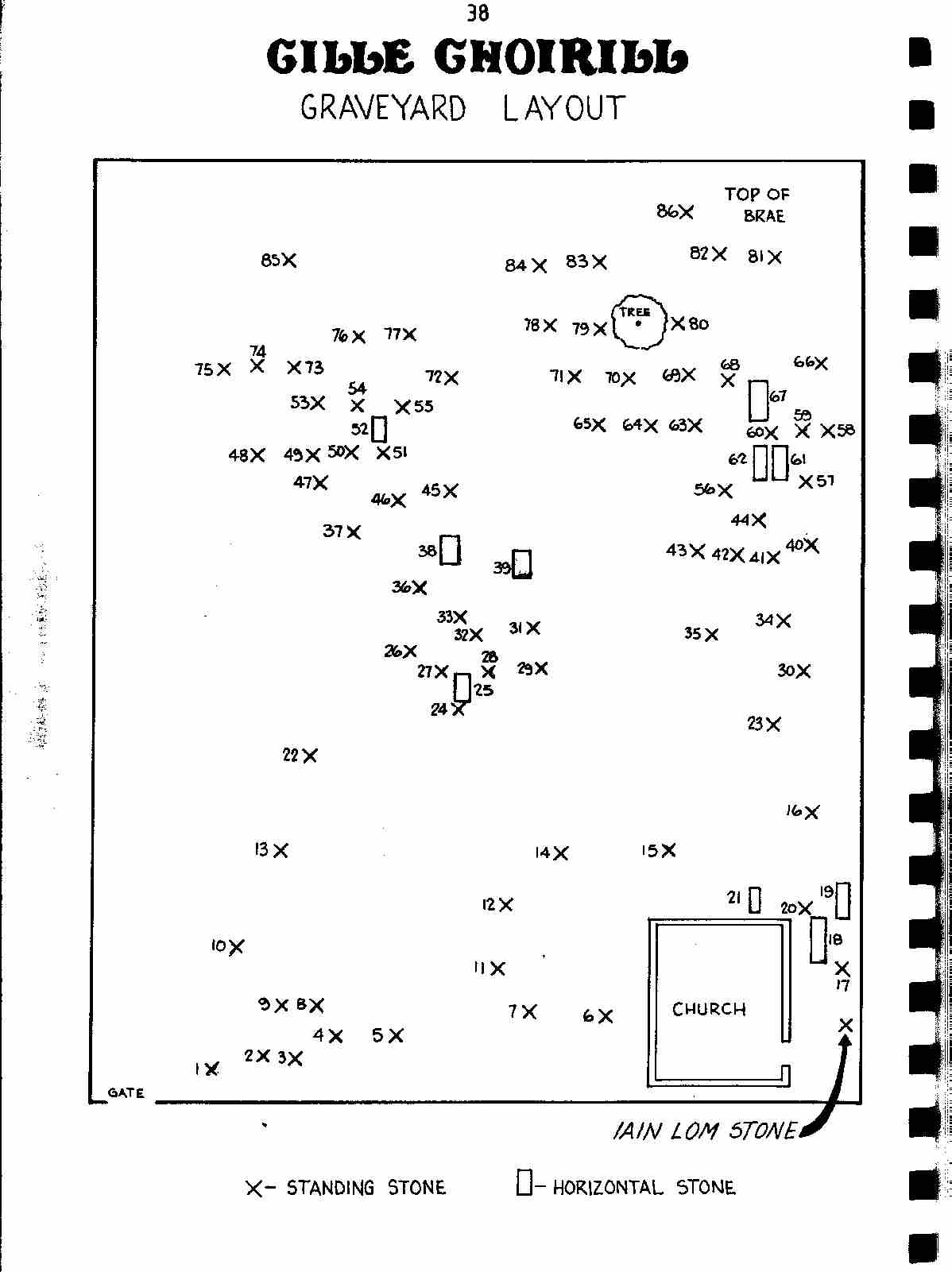
Note/ Donald Peter was a son of "Long John" of Ben Nevis Distillery Fort William. Long John's father, Donald Ruadh was a son of Angus MacDonald of Cranachan. His mother, Janet MacDonald, was a daughter of Katherine MacDonald, (1733-1829) who married No. 61 [In the Gravestone Inscriptions] and who was a daughter of Alexander 17th Chief of Keppoch, killed at Culloden at 1746.
John MacDonald, Ben Nevis Distillery, died Millburn, Fort William 26 October 1856, 60th year of his age and to Mary McCormick his spouse who died at Kildrummil, Nairn,21 June 1867 in her 67th year. Also their child Jane who died in infancy.
Note/ Also known as "Long John". His parents were Donald (Ruadh) MacDonald Torgulbin and Janet daughter of John Dubh Aberarder. He was the grandfather of Archbishop A.J. MacDonald O.S.B. of Edinburgh (1871 - 1950).
Second owner of Blaracha - born 1863 died 1954.
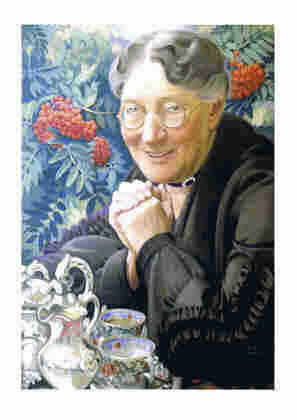
MRS RYAN A DEARLY LOVED LADY, PASSED TO her rest in Edinburgh on Saturday evening. She was 91 years of age and had been resident in an Edinburgh Nursing Home over the past eight months.
A daughter of the late Mr and Mrs D. P. McDonald - Mr McDonald was the owner of the famous "Long John's Dew of Ben Nevis" - she was born at Millburn and brought up in Fort William, Lianachan and Keppoch. She was educated at New Hall Convent, Essex and thereafter she studied music in Germany and Italy. Mr J. P. Ryan whom she married, was a teaplanter in Ceylon and where he died about 1920 his widow made her permanent home at Blar-a-cha Roy Bridge, where she did much entertaining and which became a centre. Grief came to her in the 1930s when her only daughter, Elizabeth, a singer, died.
Mrs Ryan was a sister of the late Most Rev. Andrew Joseph McDonald Archbishop of St. Andrews and Edinburgh from 1929.
Mrs Ryan's interests were many. One of the founder members of the West Highland Musuem she was Chairman until 1952. She was also one of the original members in Scotland of the S.W.R.I. and was President of the Inverness-shire Federation. S.W.R.I. For many years she was on the Board of Management of the Belford Hospital and was Chairman of the Hospital Linen League. She was a member of the Management of the St. Andrew's Ambulance. Every good work of the district had Mrs Ryan's support and she gave most willingly of her services. With an excellent knowledge of Gaelic she often presided at Ceilidlis. Mrs Ryan actually was conversant with several languages and was widely cultured. Always keenly interested in children, she gave prizes and treats to the children in Fort William, Kinlochleven and Roy Bridge.
Mrs Ryan's good works will always be remembered as will her fascinating wit which lifted the spirit of all who came in contact with her.
Requiem Mass was said by Father Dominic MacKellaig at the funeral service in St. Margaret's Church Roy Bridge on Tuesday and the cortege, one of the largest seen in the county and representative of all classes, therafter went on to Killiechuriel Burial Ground. The service was fully choral with Monks from Fort Augustus in the choir.
The pall bearers were - Mr A. J. Macdonald (nephew), Mr Roderick Macdonald (great-nephew), Mr Alistair Blit Edinburgh, Mr Robert Herd Edinburgh, Mr John Macdonald Roy Bridge, Mr Peter MacFarlene Spean Bridge, Mr James Macdonald Bohenie, Mr D MacKillop Roy Bridge and Mr J MacPherson Fort William.
Mrs. RYAN, Spean Bridge, Inverness-shire
Members all over Scotland, and especially those who were connected with the S.W.R.I. in the early days, learned with deep regret of the death, in August, of Mrs. Ryan, at the age of ninety-one. Mrs Ryan was a greatly loved personality throughout the movement and Mrs. Gooch has kndly written for us the following appreciation of her work.
To those of us who have lived in Lochaber, the name "Aunty Ryan" needs no explanation. We will never forget her wit and gift of narrative. Her knowledge of the folklore and history of her beloved country was quite unsurpassed and it, I fear, lost to us now. Her kindness and generosity, unheard, unheralded except to those who benefited, helped many lame dogs over stiles and many times her hand guided them further on their way.
Her zelous work for, and with, the S.W.R.I. will never be forgotten. She was one of the first members in 1917. She started the W.R.I. at Spean Bridge and was for many years President. She was also largely responsible for building up the Inverness-shire Federation, and until a few years ago was President of it,too. Her journays to visit the W.R.I. all over the Mainland and Islands brought life and interest to the members. The memories of Elizabeth Ryan will never pass from us. E.G.
Mrs Ryan Elizabeth Ryan, nee Macdonald, one of the founder members of the museum, died in August 1954. She has been Chairman from 1938 until 1950 and she still maintains a presence through her portrait by Keith Henderson which hangs on the upper stairs.
Forty-five years on, it is difficult to portray in words one of the "old school" like Mrs Ryan. She was born in the Distillery house at her father's Ben Nevis distillery in 1863, and her obituary in the Oban Times described in detail her involvement in the many charities and organisations which were so important in the days before the welfare state. In particular there were the Belford Hospital and its linen league, St Andrew's Ambulance and the SWRI, of which she was president of the Inverness-shire federation for 27 years. She was deeply involved in the Fort William Mod of 1936 and also sang as a member of the Roy Bridge choir. Most important to her was her work for the Catholic Church in her early days in Fort William and latterly in Roy Bridge where she played the organ on Sundays and where she was involved not only in the church but also the hall and other local charities.
![Village of Roy Bridge, Invernesshire - Blaracha is next to the Chapel House [left of photo]](village.jpg)
A good Highland lady indeed - but she had as a girl travelled widely. She studied music in France and Italy and is described as being "conversant" with several languages (in addition to Gaelic) and being widely cultured. She has spent most of her married life far from Lochaber. Her husband James Ryan, whom she married in 1890, was a tea planter in Ceylon and they lived there until his death in 1920.
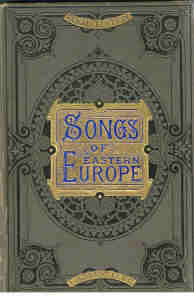
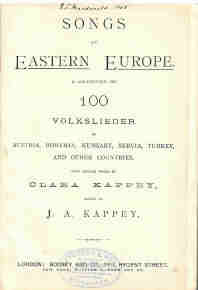
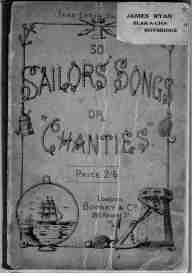
None of this however captures the flavour of one who obituary starts - "Mrs Ryan, a dearly loved lady" and who was said in the SWRI magazine to have "cheered, inspired, encouraged and strengthened everyone with song and dance, jokes and tales of old times, old people and places …" or in her obituary "will always be remembered for her fascinating wit, which lifted the spirits of all who came in contact with her". It was all long ago but there are still some who may remember her for donating "prizes and treats to the children in Fort William and Kinlochleven" in those less comfortable days.
Fittingly the cortege to her funeral in Cille Choireil was described as one of the largest seen in the country and representative of all classes.
Held at Fort-William on Thursday, 12th June, was preceded by a social gathering in the Twon Hall on the evening of the 11th, the President and Vice-President providing the tea.
As a result of the voting the following area Committee were elected:-
Chairman - Mrs Gooch, Torcastle, Banavie.
Hon. Secretary and Treasurer - Mrs. Munro, U.F. Manse, Taynuilt.
Asst. Secretary and Treasurer - Mrs. Stewart, Achara, Duror.
Argyllshire - Mrs. Hutcheon, U.F. Manse, Connal; Mrs. Munro, U.F. Manse, Taynuilt; Mrs. Stewart, Achara, Duror.
Inverness-shire - Mrs. Gooch, Torcastle, Banavie; Mrs. Parson, Achadalieu, Banavie; Mrs. Ryan, Blaracha, Roybridge;
Islands -
Argyllshire - Mrs. Cheape, Tiroran, Mull
Inverness-shire - The Hon. Iona Macdonald, Armadale Castle, Skye.
Spean Bridge. - April. Mrs. Ryan, President, gave an interesting account of her recent travels in Italy and Switzerland; Mrs MacKinnon, of the Fort William W.R.I., gave an instructive demonstration on basket making.
Inverness County Federation The annual business meeting of the Federation was held in the Fort-William Clubroom. Mrs,. Ryan, President, presided. The Secretary and Treasury submitted satisfactory reports. The office bearers were re-elected. Lady Ottley was elected Convener of the Rural Industries Committee, in place of Mrs. Parsons, who left the district. Arrangements were made to have a list sent out at an early date to all the Institutes in the North-Western Area of the different classes in connection with the Federation Show, which is to be held at Fort-William in August, 1927.
Dedicated to the great Clan Donald and Jacobite poet Alasdair Mac Mhaigstir Alasdair, who died in 1770. Wiseman Macdonald adopted the idea of both commemoration and practicality in donating a three face Memorial Clock in the tower of St Mary's Church, Arisaig, with a bronze tablet set in the wall of the tower.
The Dedication was attended by notabilities of Church and Civil Life. Included in the Gentlemen of The Cloth were his Lordship Dr Martin, Bishop of Argyll and the Isles; Canon MacNeil of Morar; Father MacKinnon of Arisaig; Father MacClymont of Campbeltown; the Reverend D. Logan of the Established Church of Scotland; and the Reverend A. MacLean of the United Free Church. In day-kilt Highland costume were Clan Donald Society members including President John McDonald; Honorary Secretary John D. Macdonald; Mr Peter Macdonald, a past President; Mr John D. Macdonald, ex-President of the Uist and Barra Association; Mr ran Macdonald; many of them with their ladies. There was Mr Alexander Macdonald, the Arisaig Secretary; Mr Laclilan Gillies of Morar; Mrs Ryan of Blar-a-cha, Roy Bridge; Miss Astley of Faire-na-Scuir, Arisaig; Miss Nicholson of Arisaig House, and many others. Ref: http://www.clandonald.org.uk/cdm09/cdm09a17.htm
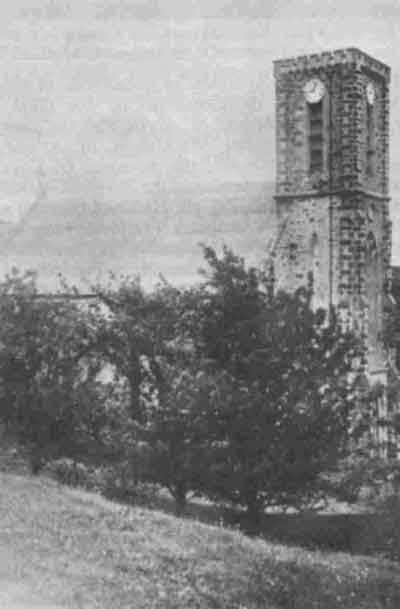
Roy Bridge's old catholic parish church, before the dedication of St Margaret's in the village. Mrs Ryan is in the centre of the photograph.
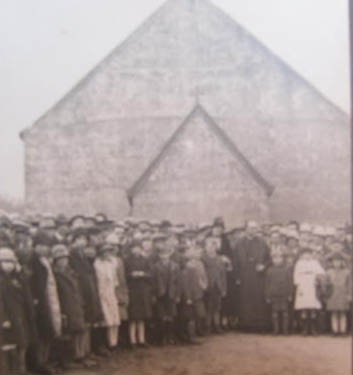
Mrs. Ryan, who has just returned from Vienna, where she had attended the International Council of Women as representing the S.W.R.I., gave an account of her visit to that capital as a meeting of Speanbridge W.R.I. This was illustrated by pictures, journals, and small souvenirs of her stay in Vienna. The actual conference which she attended was that connected with the rural aspects of country women's work all over the world. The sessions of the Women's International Council have a duration of ten days. The Rural Conference was confined to three. Delegates were present from Australia, America, Canada (the original home of Women's Institutes) from India, South Africa, Czechoslovakia, Switzerland, England, Ireland, Scotland, Germany, Finland, Belgium, Norway, Denmark, Sweden, and the Netherlands.
Among the outstanding speakers, both for delivery and for interest of subjects, were Mrs. Fairfax representing Australia, Mrs. Lang from Canada, Miss Cornelia Sorabjee (the first woman barrister in India), Lady Tata, also representing India, and Miss Frysingers, from U.S.A. But there were many others who were listerned to with deep interest. Countess Kaiserlingh and Fru Michelet, representing Germany and the Northern nations, were both very excellent. A full report will be published in pamplet form compiled by Mrs. Alfred Watt (to whom so many of the older Institutes owe their foundations) on the same lines as last year's "What the Country Women of the World are Doing," whose popularity is atteseted by the fact that it is now out of print. A liaison committee has been established between all the nations whose delegates were present at the council, and a full account of this and its workings will also be found in the forthcoming report. Its objects is to promote, extend, and continue friendly personal relations between all women who are already linked together by in what for want of a better word must be called rural interests from the feminine side, and in doing this effectively (as it will) it will lead to better mutual understanding and friendly unpolitical relations between woman of all nationalitites all the round world over. Its sphere is the fulfilment of the Institute motto "Home and Country".
On Local History - Lochaber, Scotland:
James Ryan was a good friend of Arthur Conan Doyle (ACD). Many of the letters between James and ACD have been preserved. Not many details are known about James - however from these letters it seems that James also attended medical training, and picked up the opportunity turned down by ACD to work as a medical officer in Ceylon, and staying on to run the family tea plantation there.
This section of the web page tells of key dates of Arthur Conan Doyle, given their early friendship.
Letter from James Ryan - Edinburgh, September 1912: Of course you will be accused of poaching on [H. G.] Well's manor, but the suspended animation idea is as old as the Seven Sleepers of Ephesus. The destruction of London you will find of course in Wells's "War of the Worlds" which you might glance over so as to be able to keep off his grass plot. Even as a scientific tale-writer Wells with his sugared science is only a follower of Jules Verne, but the former is sure to have some critical jackal who will try to howl you off your own "kill". I don't know who the first writer was who described a man kissing his best girl, but it seems to have appeared in print a good many times since without anyone being accused of plagiarizing."
James Ryan suggested calling the "poison belt" encountered in space as "Daturon" as "your poisonous gas appears much more scientific advice, including the appropriate spectroscopy, climatology etc.."
James Ryan questioned the ending of "The Lost World" - "poor Gladys, what has she done that she is not Mrs Malone by now, or is Malone doing the Enoch Arden trick, minus the matrimony?"
My dear Arthur, It was a great shock to me when Lyn read out the curt notice of poor Kingsley's death at the railway station this morning, and it is hardly necessary for me to say how deeply we sympathize with you in your sorrow. I loved Kingsley like a son and had a very keen appreciation of his many fine qualities and clean-mindedness and a very high sense of duty. Of all the young men I have known he impressed me more than any, quite apart from considerations based on our friendship from boyhood. In addition he was full of loveable and likeable qualities - a very preux chevalier. I could never picture him as capable of anything mean or underhand in deed, nor of any ignoble thought. I was full of hope that, safe from the danger zone, he would live for many years as the simple, cleansouled Englishman he was, and had looked to see him with boys and girls of his own about him. Fate, inexorable, has ruled otherwise. Poor Toots will feel his loss terribly. Please tell her how I feel for her. I havent the heart to write to her direct as I had at first meant to.
Toots is the family nickname for Kingsley's sister - Mary Conan Doyle.
Reference - Arthur Conan Doyle - A Life in Letters, The Penguin Press, 2007, by John Lellenberg, Daniel Stashower, Charles Foley based upon letters held in the British Library. The first quote of this book is from James Ryan "Your ingenious habit of not dating your letters will make your biographer curse".
Robert Philip Andrew Hurd was born on 29 July 1905, the fourth son of Sir Percy Angier Hurd MP and his wife Hannah Swan Cox who came from Dundee. He was educated at Marlborough, where he was a year ahead of Ian Lindsay, and at the LCC Central School of Arts. Thereafter he went up to Emmanuel College, Cambridge, when he renewed his school friendship with Lindsay and became a member of the circle centred on Mansfield Forbes and Raymond McGrath. While there he was engaged to be married to a fellow student, Elizabeth Ryan of Roy Bridge, but she died before the marriage could take place.
Hurd came to Scotland in 1930 or 1931 to complete his studies at Edinburgh College of Art and work for two of the staff there, Frank Charles Mears and Charles Denny Carus-Wilson. His intention was to 'write about architecture and investigate national traditions', a subject almost certainly inspired by Mansfield Forbes, resulting in the architectural sections in 'Scotland in Quest of her Youth' (1934) and 'The Scots Weekend Book' (1937). In 1932 during the course of these studies Hurd entered into a partnership with a colleague in Mears's office, the modernist architect Norman Alexander Gordon Neil (born 1899), who was deeply influenced by modern German and Scandinavian architecture.
Hurd never sought membership of the RIBA and was content to remain FRIAS only. He was Vice-President of the Scottish Georgian Society from its foundation, and an honorary member of the Georgian Group in London, while his lifelong interest in broadcasting and the performing arts brought him membership of the Scottish Advisory Panel of the BBC and of the Council of the Edinburgh Festival Society. Alan Reiach described him as 'personally a man of great charm, a witty and sometimes irreverent companion. [He] had a strong determination, and while always concerned with broader issues affecting affairs in Scotland no cause that he thought worthwhile was too small for his support.' Hurd never married.
Hurd died suddenly while on holiday in Zurich, Switzerland on 17 September 1963. His body was brought home and buried in Canongate Churchyard.
Reference - www.codexgeo.co.uk/dsa - Dictionary of Scottish Architects
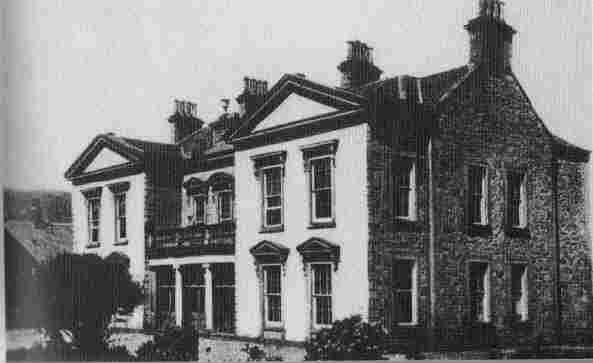
Please contact me at Devenport Estate if you have any information on Blaracha, its former occupants or any feedback on this web site.
Current inquiries on ancestry message boards for more information on Blaracha are:
Descendents of Dr Berkeley of New South Wales, Australia - relative of Mrs Joan Weld of Berkeley, Manor Cottage, Dorset ex. Hanwell Castle, Banbury, Oxford. Dr Berkeley being a primary beneficiary of Mrs Joan Weld. Mrs Joan Weld being the primary beneficiary of Mrs Ryan's estate, including Blaracha in 1954.
Descendents of John Macdonald, who emigrated to South Africa in 1918. John built Blaracha and ran the Ben Nevis Distillery until its sale from the Macdonald family. Potentially going to the original Parel Vallei Homestead on the right in Parel Vallei Road, Somerset West, South Africa.
The Parel Vallei Homestead dates to 1717 as a farm, then divided into two, was sold three times eventually becoming the property of Olaf de Wet. In 1748 the two divisions were sold separately, the original Pare Vallei to Matthaim Le Roux and De Paarden Stal (or later De Paarde Vlei) to Jacob van Renen.
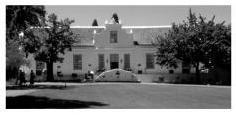
Reference - http://www.somersetwest.com/somersetwest_6.htm
The basis of Devenport's design - Blaracha, Scotland:
Inquiries are welcome at:devenport_estate@hotmail.com
Web Page Updated: 19th June 2008
